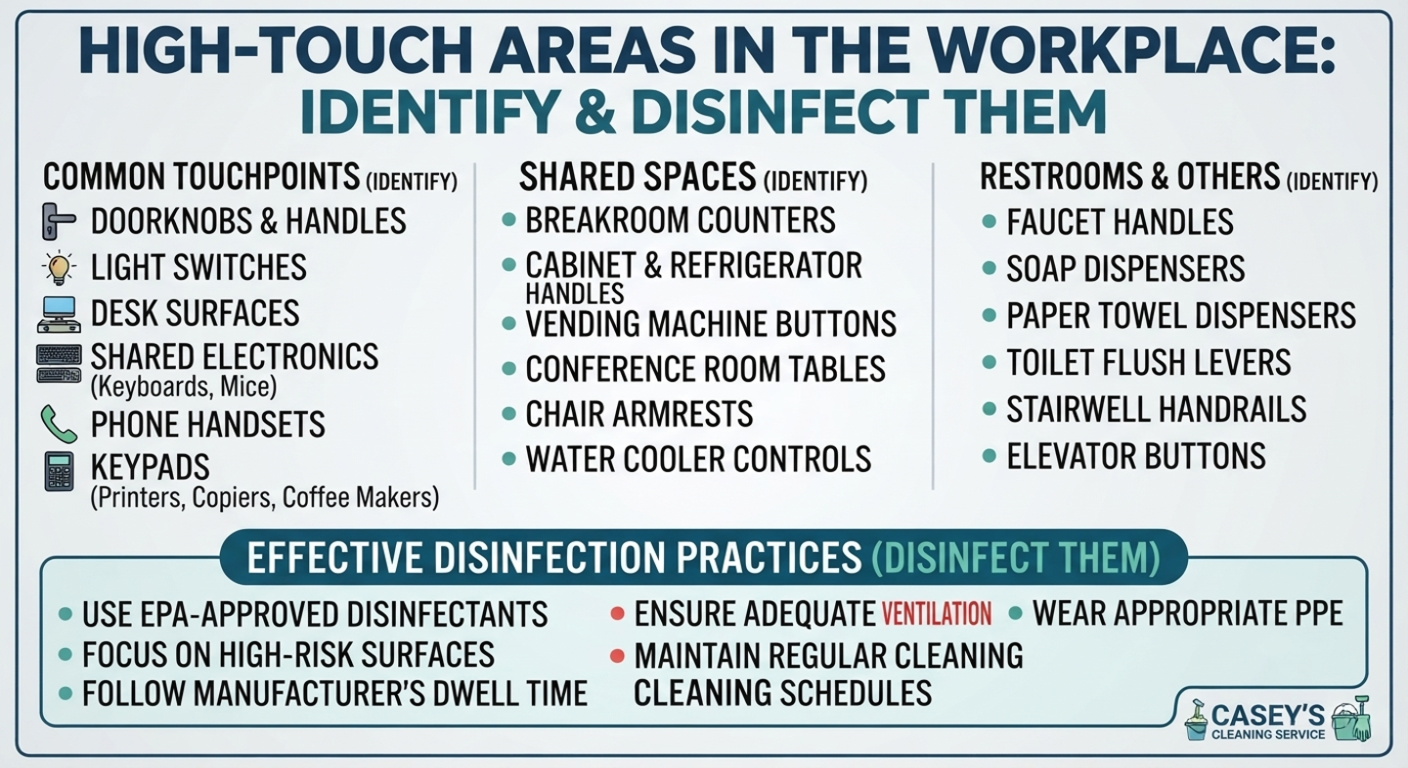
Common touch sites like doors, shared equipment, and public areas can easily develop into high touch areas for viruses. Maintaining clean surfaces is crucial for the security of employees, guests, and clients in commercial cleaning settings like offices, schools, healthcare facilities, retail businesses, and industrial sites. Maintaining compliance standards, preventing diseases, and assuring people that your facility is being run safely are all made feasible by good hygiene. One of the most crucial components of any workplace hygiene program is knowing which surfaces are the most dangerous and which chemicals and disinfection techniques are most effective against them.
High-Touch Areas: What Is It?
High-touch spaces are surfaces that many individuals will come into contact with often throughout the workday. These surfaces have the potential to rapidly transmit bacteria, viruses, and other illnesses from person to person if they are not properly cleansed. The majority of high-touch surfaces have basic traits in common:- Throughout the day, they are touched a lot.
- They are utilized by several people.
- They don’t receive enough cleaning.
Why Regular Disinfection Is Still Important?
Frequently handled surfaces can get dirty throughout the day, even in offices with good housekeeping procedures. While daily disinfection helps lessen the presence of germs on frequently handled surfaces, normal cleaning removes apparent filth and debris. When combined, these Nassau County services assist companies in keeping their workplaces, clients, and guests cleaner. Consistent disinfection can be a particularly useful component of an overall cleaning strategy for establishments with high foot traffic, such as medical offices, schools, churches, fitness centers, and office buildings.Restrooms Are Among the Highest-Priority Areas
One of the most used areas in any establishment is the commercial restroom. Usually, routine disinfection and cleaning consist of:- Sink and countertop cleaning
- Toilet and partition sanitization
- Wipe light switches and door knobs
- Replenishing soap and paper goods
- Emptying trash cans
Common High-Touch Areas in the Workplace
High-touch areas vary slightly depending on the type of workplace, but they all have one thing in common. By identifying the high-touch surfaces in your workplace, your facilities teams can limit cross-contamination, concentrate their cleaning efforts on areas that present the biggest risk, and keep everyone’s workplace safer and healthier. Some of the most typical high-touch surfaces to be mindful of in any workplace are as follows:Venues for Retail and Hospitality
- Countertops and card machines
- Handles for shopping baskets and trolleys
- Handrails and flush handles for toilets
Offices
- Door handles and light switches
- Keyboards, mice, and shared desks
- Printer buttons and lift buttons
- Break room appliances, like kettles and microwaves
Healthcare Environments
- Call buttons and bed railings
- Controls for medical equipment
- Reception counters and chairs in waiting areas
- Hand sanitizer dispensers, triage points, and any surface in a patient-facing area