A tidy office is more than just a pleasant to have; it represents your company’s professionalism and regard for its employes and customers. One of the most common bases of despair in commercial cleaning is a lack of established expectations. Businesses assume certain operations are included, whereas cleaning providers assume others are out of scope, and gaps quickly appear. Casey commercial cleaning and the high result quality maintained. Understanding what is often included in professional office cleaning enables you to set reasonable expectations.
What Is Involved in Regular Office Cleaning?
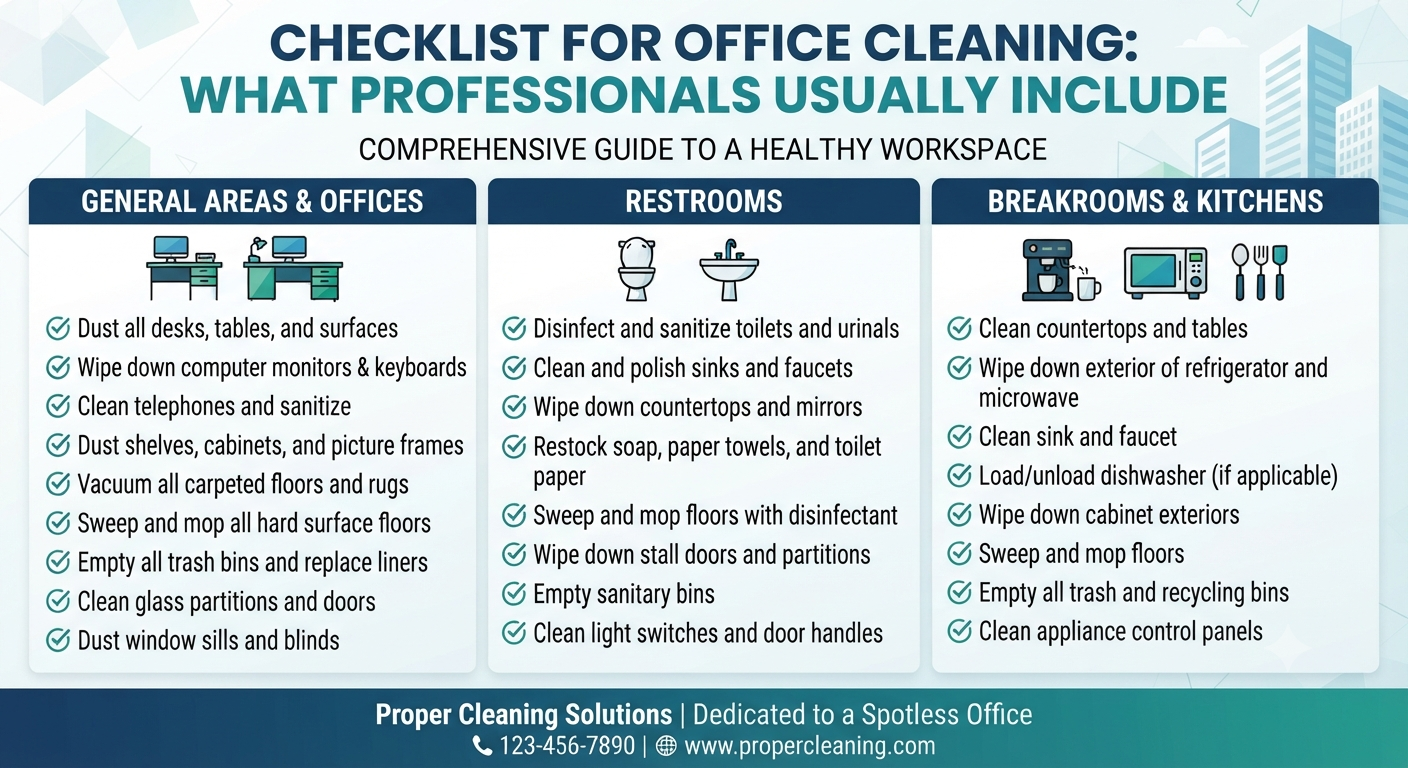
While the exact scope varies by supplier, most conventional plans focus on the places where employes and visitors interact the most regularly. A typical office cleaning checklist usually includes:- Vacuum carpets and rugs
- Emptying garbage and replacing liners.
- Dusting the accessible surfaces.
- Cleaning desks and shared workspaces (as permitted)
- Wipe high-touch locations like handles and switches.
- Cleaning the kitchen and breakroom surfaces.
- Sanitizing restrooms
Reception Areas and First Impressions Matter
The greeting room gives an immediate impression of your company. Clients may never see your operations, but they are likely to notice the floors, glass, surfaces, and general look. Even minor details such as dust collection, fingerprints, and worn-looking entryways influence how people view professionalism. Professional office cleaning typically includes the maintenance of reception desks, waiting spaces, entrance floors, and visible touchpoints. However, businesses may presume that decorative shelves, inside glass, or exhibition areas are automatically included when they are not. If look is important to your firm, as it typically is, these things should be negotiated during setup.What Professional Commercial Floor Cleaning Include?
Workspaces are among the most misunderstood aspects of office cleaning. Some businesses request thorough desk cleaning and organizing. Others prefer that cleaners avoid personal work spaces completely. Instead of handling personal possessions, the most common recurrent service is to dust accessible surfaces and clean around desks. If your team works with shared workstations or hot-desking arrangements, more thorough cleaning may be necessary. Coffee stations, microwaves, sinks, countertops, refrigerator knobs, and eating spaces are all in constant usage. Many employers are unaware of how much influence these locations have on employee experience. Surface cleaning and visible area sanitization are common aspects of professional office cleaning. What is commonly excluded unless requested:- Interior refrigerator cleaning
- Cleaning the interior of microwaves
- Cabinet interiors
- Dishwashing
- Food waste management
Washrooms Are Generally More Detailed Than Other Areas
Bathrooms are frequently given the most detailed attention in corporate cleaning techniques. Standard service usually includes:- Cleaning and disinfecting restrooms and urinals
- Sink and counter cleaning
- Mirror polishing
- The floor cleaning
- Garbage Removal
- Touchpoint disinfection.
What Professional Commercial Floor Cleaning Includes?
Floor care often takes up the majority of workplace cleaning time. Carpeted workplaces require vacuuming and edge detailing. Hard surfaces must be swept and mopped. Entryways may require more frequent upkeep depending on the weather and traffic. Many organizations overlook how rapidly floor appearance affects the whole atmosphere of an office. Serving businesses in Nassau County, we specialize in offering dependable and tailored cleaning solutions for offices, commercial buildings, medical facilities, and other settings. Businesses frequently fail to recognize the distinction between regular floor cleaning and extensive floor care. Carpet extraction, machine scrubbing, polishing, and restorative floor repair are typically scheduled separately.Areas Businesses More Often Forget
Businesses typically believe that cleaning crews will tackle everything visible. In truth, precise commercial cleaning performs best when expectations are established. Frequently ignored regions include:- Baseboards
- Glass throughout the interior
- Air vents
- Doors and frames
- The light switches
- Underneath the furniture
- Storage areas.
- Cabinets inside the home
- Electronic devices that are shared