Commercial tile floors are subjected to regular foot traffic, filth, dampness, spills, machine movement, and general wear. A proper commercial tile floor care and maintenance program preserves the flooring’s look while also promoting a cleaner and safer corporate environment. Cleaning and floor maintenance are required in commercial settings. The floors are kept clean on a regular basis and meet standards. Tile care should not be viewed as a one-time duty by business owners and facility managers. A well-planned regimen can help to decrease accumulation, maintain grout, improve look, and extend the useful life of your flooring. The following practices can help businesses keep their commercial tile floors appearing professional throughout the year.
Why Commercial Tile Floor Care Matters?
Commercial tile flooring improves the appearance of any office, retail store, school, or other structure. When floors are dusty, soiled, or covered in residue, visitors may remark that something appears unprofessional. Vacuum cleaning entails cleaning and preventing slippery floors. A commercial floor-care plan should prioritize both attractiveness and safety over simply making the surface appear polished. Commercial cleaning requires meticulous care. It also facilitates normal cleaning by removing dust and filth before they become deeply embedded in grout lines.
Create a Regular Cleaning Routine
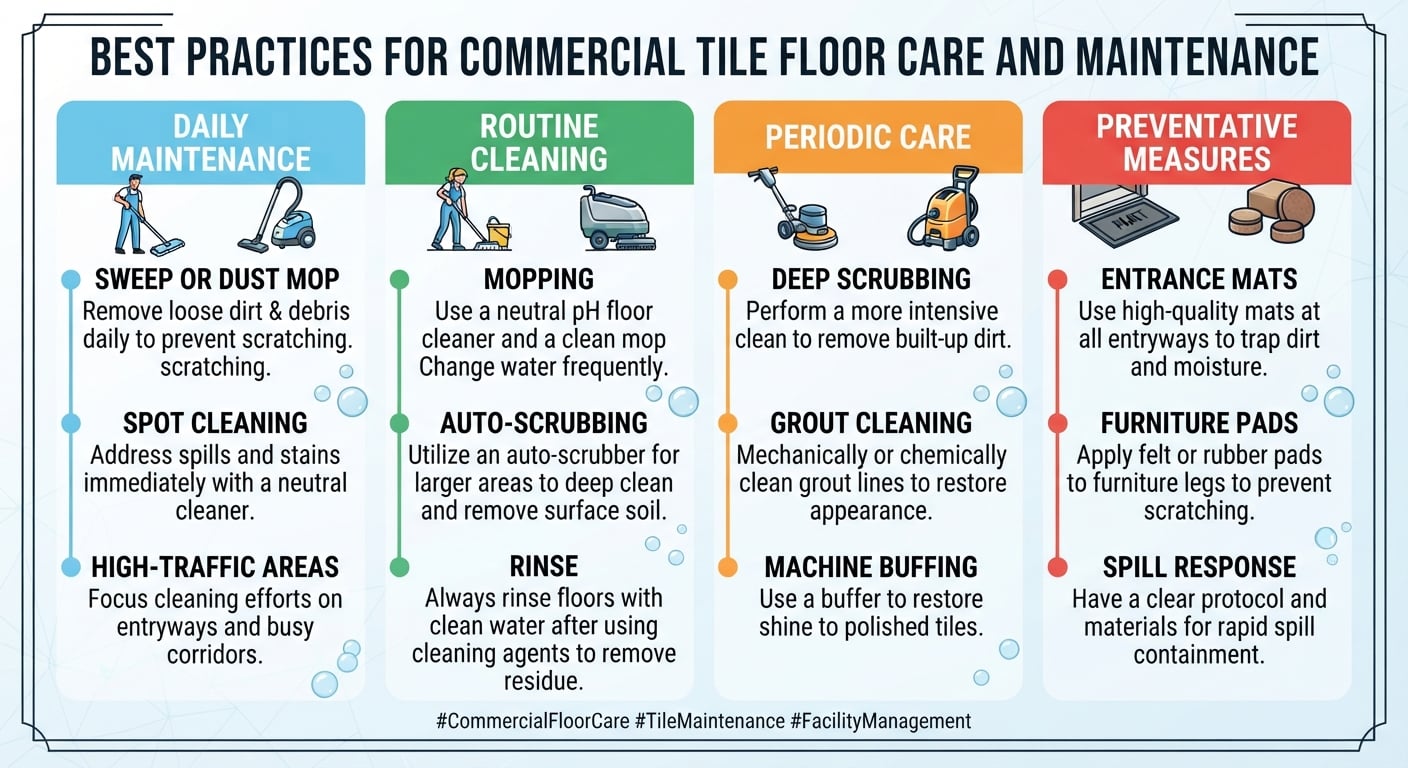
Floors in high-traffic facilities may require more frequent attention than in places with little foot activity. Cleaning schedules should be based on traffic volume, spills, weather conditions, the type of company, and the tile manufacturer’s recommendations. A practical program may include daily dust removal, damp mopping on a regular basis, spill cleanup as soon as possible, and periodic deep cleaning. The casey facility cleaning guidelines advocate washing surfaces on a regular basis, cleaning obviously unclean surfaces, and changing cleaning frequency based on traffic and use. A documented timetable also clarifies responsibilities for cleaning workers and prevents crucial maintenance activities from being overlooked.
Remove Dust and Debris
Dry soil is a major enemy of industrial tile flooring. Daily sweeping, dust mopping, or adequate vacuuming helps to eliminate these particles before they spread throughout the structure. Make sure to target concealed locations, such as corners and underneath furniture, where buildup might go undetected. If not controlled, abrasive particles can damage tile surfaces and diminish the life of the finish. Commercial cleaning is done on a regular basis. Filtered vacuums reduce tiny particles and improve indoor air quality by trapping allergens that may circulate in high-traffic areas. This preparatory phase lays the groundwork for a thorough clean by preventing debris from being redistributed in the latter stages of the process.
Effective Mopping Methods
Mopping should remove soil rather than just shift unclean water. Use a casey’s cleaning solution formulated specifically for the type of tile and carefully follow the dilution directions. Floors should be cleaned using suitable mopping technique. Excessive cleaning can create a sticky residue on the floor, attracting extra dirt and making it appear dull.The two-bucket approach is ideal for business floor cleaning since one bucket carries the cleaning solution and the other contains rinse water. Commercial cleaning guidelines recommend two- and three-bucket systems for floor mopping because they divide cleaning and rinse water. Cleaning workers should also work systematically and replace contaminated mop water or mop heads as needed.
Use Mats in High-Traffic Areas
Entrance mats can give a layer of protection to business tile floors. This is especially handy during rainy or snowy weather, when visitors might carry a lot of moisture inside. Mats should be cleaned on a regular basis. A dirty or soaked mat cannot perform its function well and may even add to an untidy appearance. Place appropriate mats near doorways and examine them regularly for moisture, wear, or movement that could provide a tripping hazard.
Conclusion
Effective commercial tile floor care and maintenance is based on consistency rather than infrequent deep cleaning. Daily soil removal, adequate mopping, quick spill response, suitable cleaning chemicals, grout care, entrance mats, deep cleaning, and frequent inspections all help to create a healthier-looking and more durable floor. Proper cleaning methods can also help to improve workplace safety by preventing slips and maintaining walking surfaces. Casey’s cleaning provides expert cleaning services in Nassau County. We help to keep spaces clean and professional by delivering dependable commercial cleaning services for offices, healthcare facilities, retail spaces, and commercial buildings. Our services are tailored to each business’s specific needs, resulting in healthier, more hospitable, and immaculate surroundings.